Some homes are more than a place to live. They are a piece of the city's story.
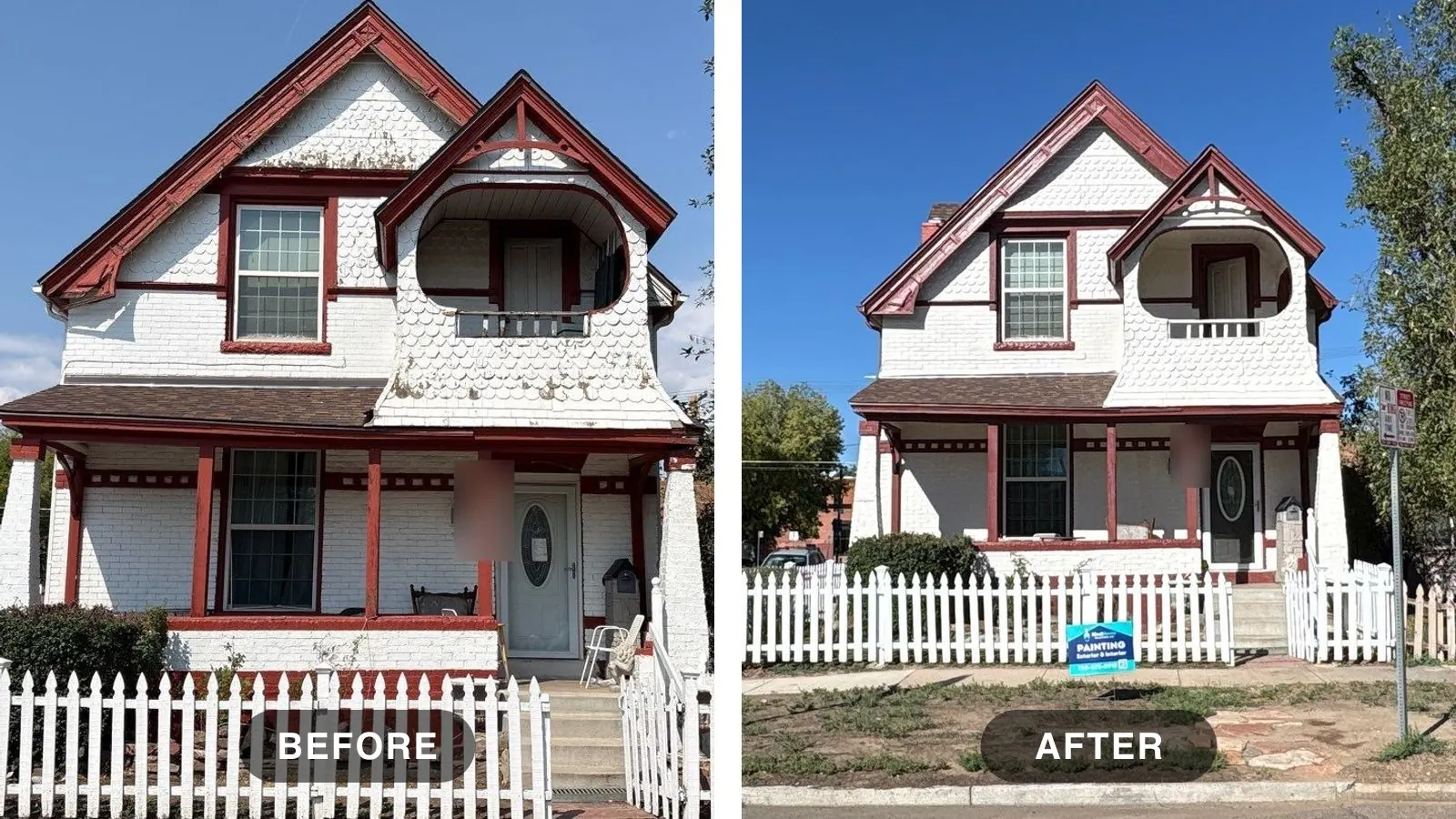
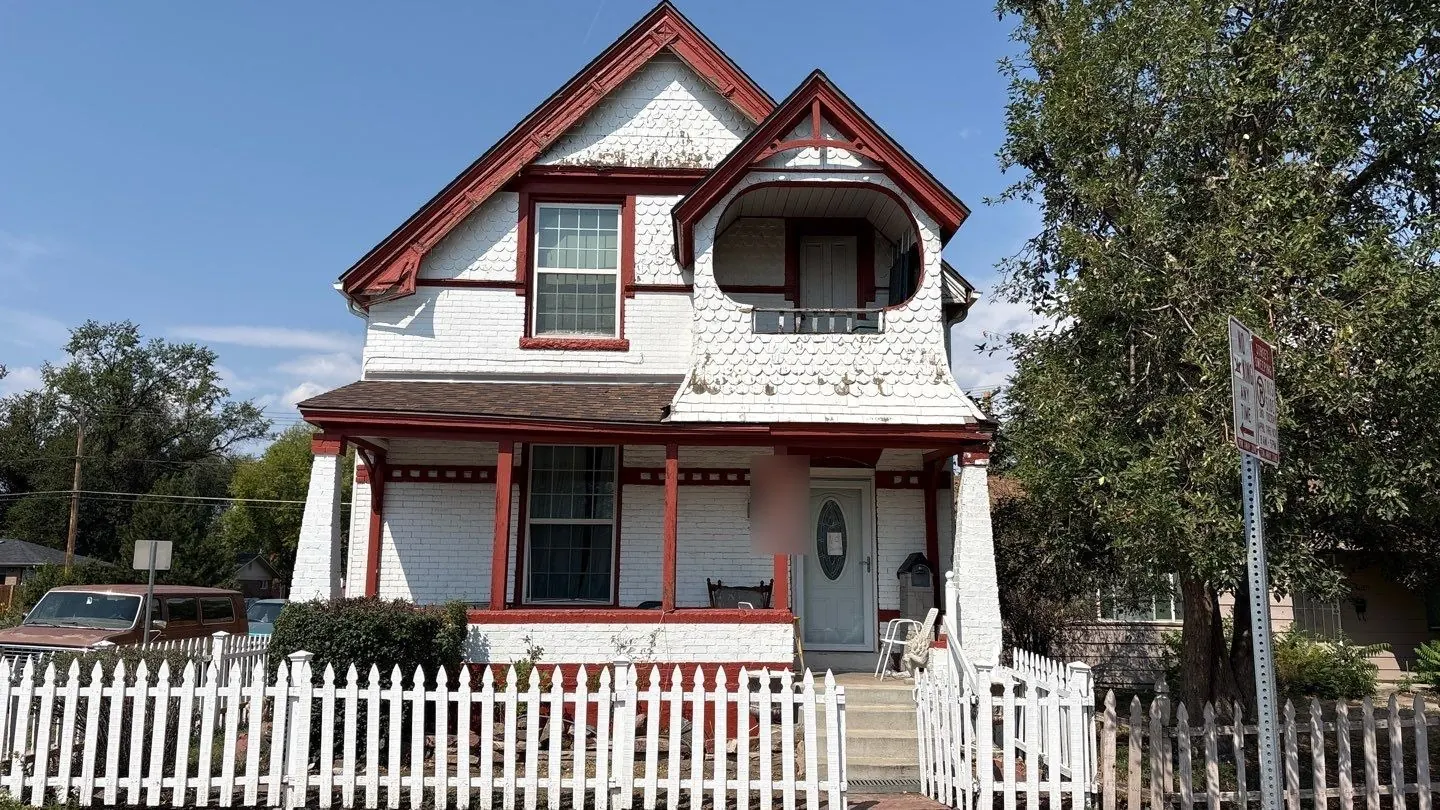
This Victorian in Denver's City Park neighborhood was built in 1890, back when Denver was still a young mining-boom town and the streets around City Park were filling in with homes just like it. After well over a century of Colorado sun, snow, and wind, its exterior was failing. The painted brick, the fascia, and the original fish-scale siding were all peeling and breaking down. The homeowner did not want to reinvent the house. They wanted it to look the way it was meant to look, so our team restored it with lead-safe prep, a careful color match, and our longest-lasting paint system.
The short version: an 1890 Victorian in Denver's City Park neighborhood with failing paint was restored using full lead-safe containment, hand scraping, caulking, and spot priming, then sprayed in Sherwin-Williams Shoji White (SW 7042) on the body and fish-scale siding and Sherwin-Williams Carriage Door (SW 7594) on the brick accents and fascia. Both colors were mixed in Benjamin Moore Aura and backed by Kind Home Painting's 12-year no-exclusions warranty. The project landed between $11,000 and $15,000.
Project Snapshot
| Location | City Park, Central Denver, CO |
| Home type | Victorian, built 1890, with fish-scale siding and painted brick |
| Body and fish-scale color | Sherwin-Williams Shoji White SW 7042 |
| Brick accent and fascia color | Sherwin-Williams Carriage Door SW 7594 |
| Paint system | Benjamin Moore Aura, color-matched |
| Warranty | 12-year no-exclusions warranty, including up to $1,000 in hail damage |
| Scope | Lead-safe containment, scraping, caulking, masking, priming bare wood, body, fish-scale siding, brick accents, fascia |
| Project manager | Jeremy Patlen |
| Investment | $11,000 to $15,000 |
The Before
Victorian homes are some of the most rewarding exteriors we get to paint in Denver, and some of the most demanding. This one had all the details that make the style special: decorative fish-scale shingles, painted brick, and deep fascia lines framing the roof.
Those same details are exactly where old paint gives out first. Every scallop of fish-scale siding has edges that catch water, and painted brick holds moisture differently than wood does. By the time we arrived, the paint on the brick, the fascia, and the fish-scale siding was cracking and peeling across the house. Leave it much longer and bare wood starts taking on water, which is when a paint job turns into a carpentry job.
It is a pattern we see on older homes all over Central Denver, from City Park to Capitol Hill. If you own one of Denver's historic homes and the paint is starting to go, our Denver exterior painting team can walk the house with you and tell you what it needs.
Meet the Project Manager: Jeremy Patlen

Jeremy Patlen ran point on this restoration from start to finish. A house this old asks more of a project manager than most. Lead-safe containment has to be in place before the first scraper touches the siding, the crew has to stay in respirators through the whole prep phase, and every surface (fish-scale shingles, painted brick, fascia) needs its own approach before a single color goes on.
Jeremy coordinated the crew as they divided and conquered the prep, kept the containment tight around the whole house, and sequenced the spray work so the Shoji White and Carriage Door went on cleanly across every curve of the fish-scale siding. On a home with this much history, getting the details right is the whole job.
You can watch this project's full transformation on our Instagram.
Step One: Lead-Safe Containment
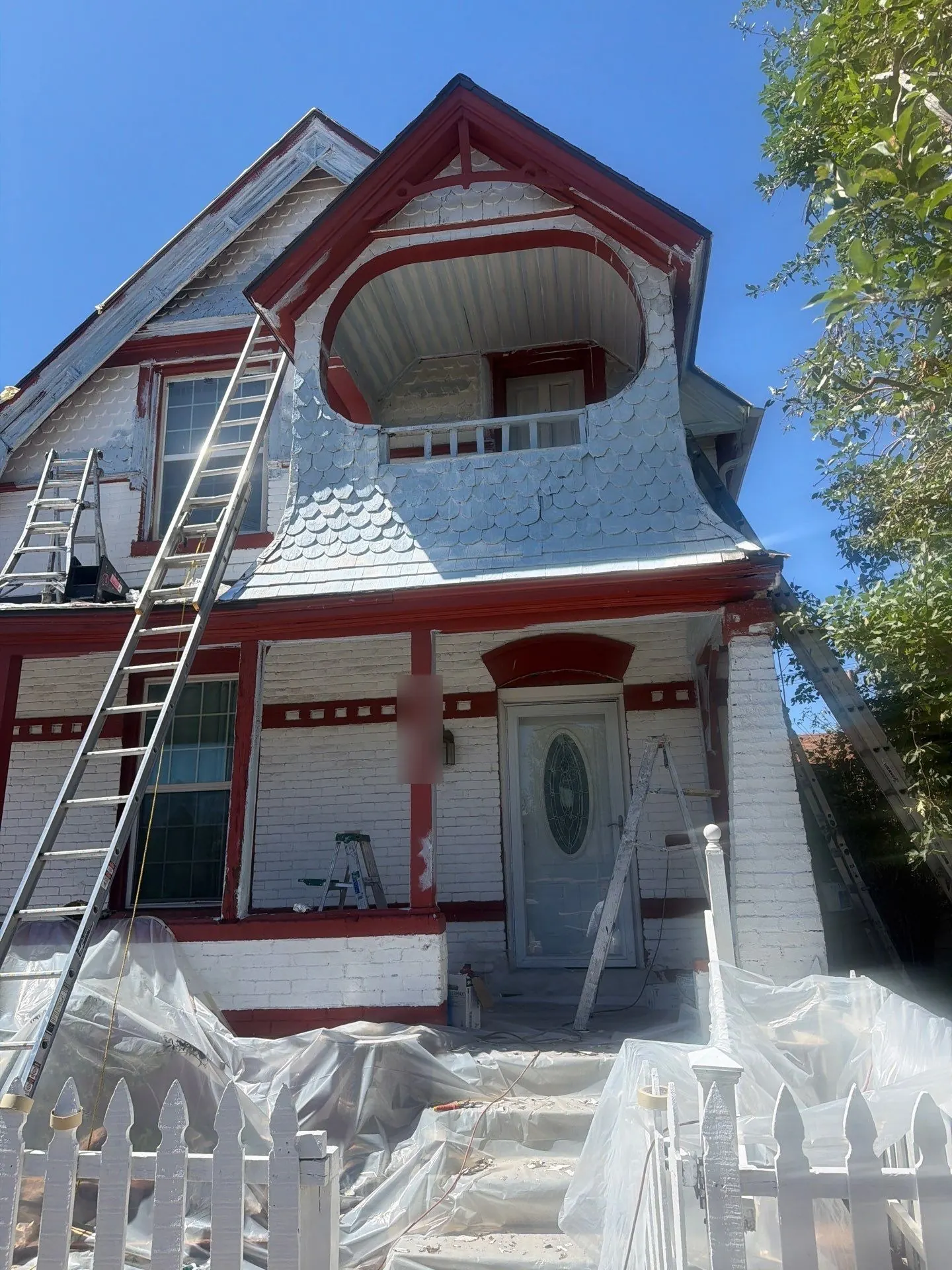
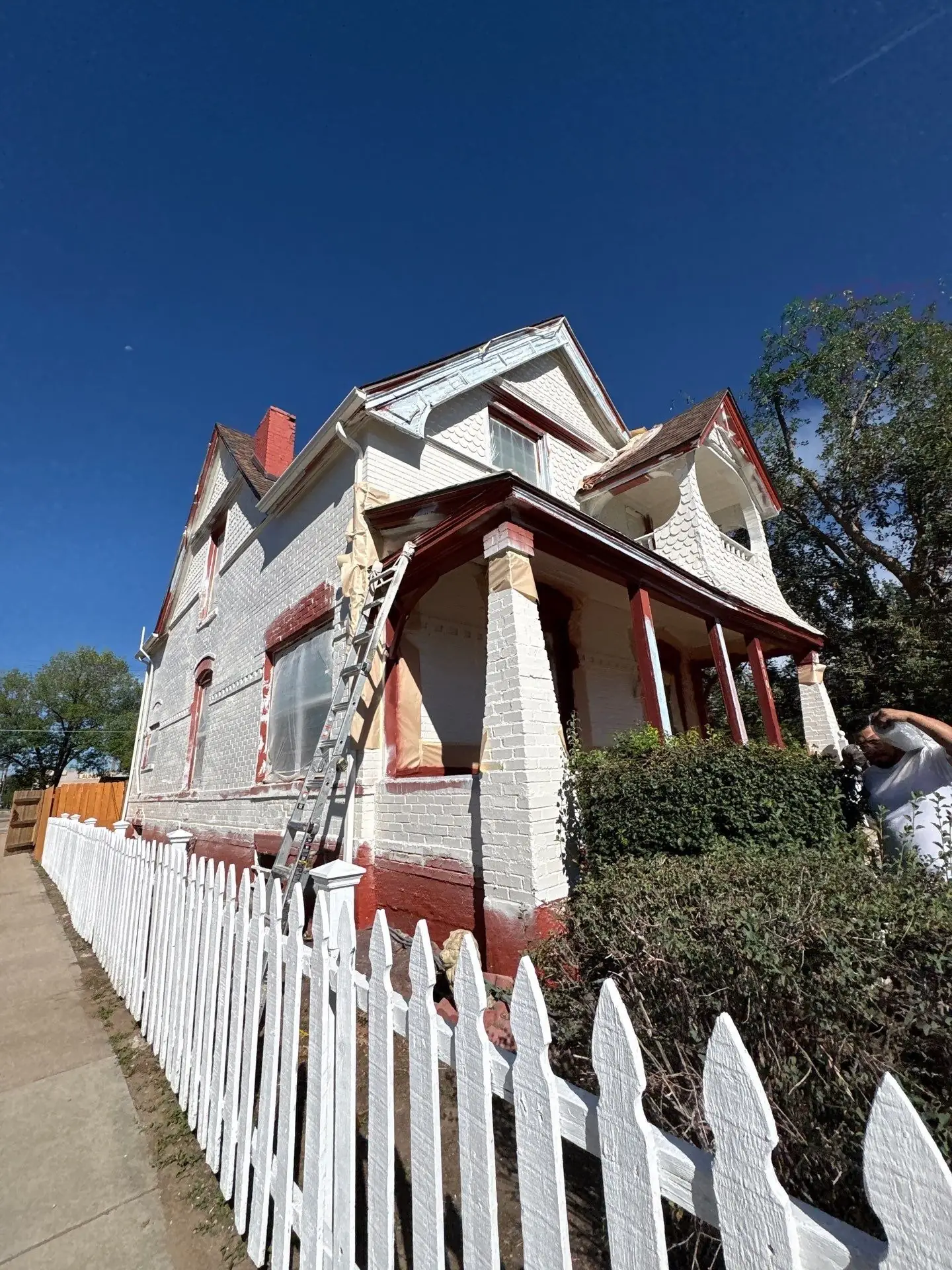
Lead paint was used on homes from the late 1800s right up until it was banned for residential use in 1978. On a house built in 1890, it is almost certainly in the layers somewhere. So before any scraping happened, our crew laid tarps and plastic sheeting around the entire perimeter of the house to catch every chip of old paint and keep it out of the yard, the garden, and the soil.
This is also why this home was not pressure washed. On most of our projects, pressure washing is step one. On a lead-painted home, it would spray contaminated paint particles everywhere you do not want them. Instead, the surface was cleaned and prepped by hand.
Is your home older than 1978? Assume it has lead paint until a test says otherwise. We are an EPA Lead-Safe Certified firm and we test for lead at your estimate, so you know exactly how your project will be handled before work starts.
Paint Prep on a Historic Home
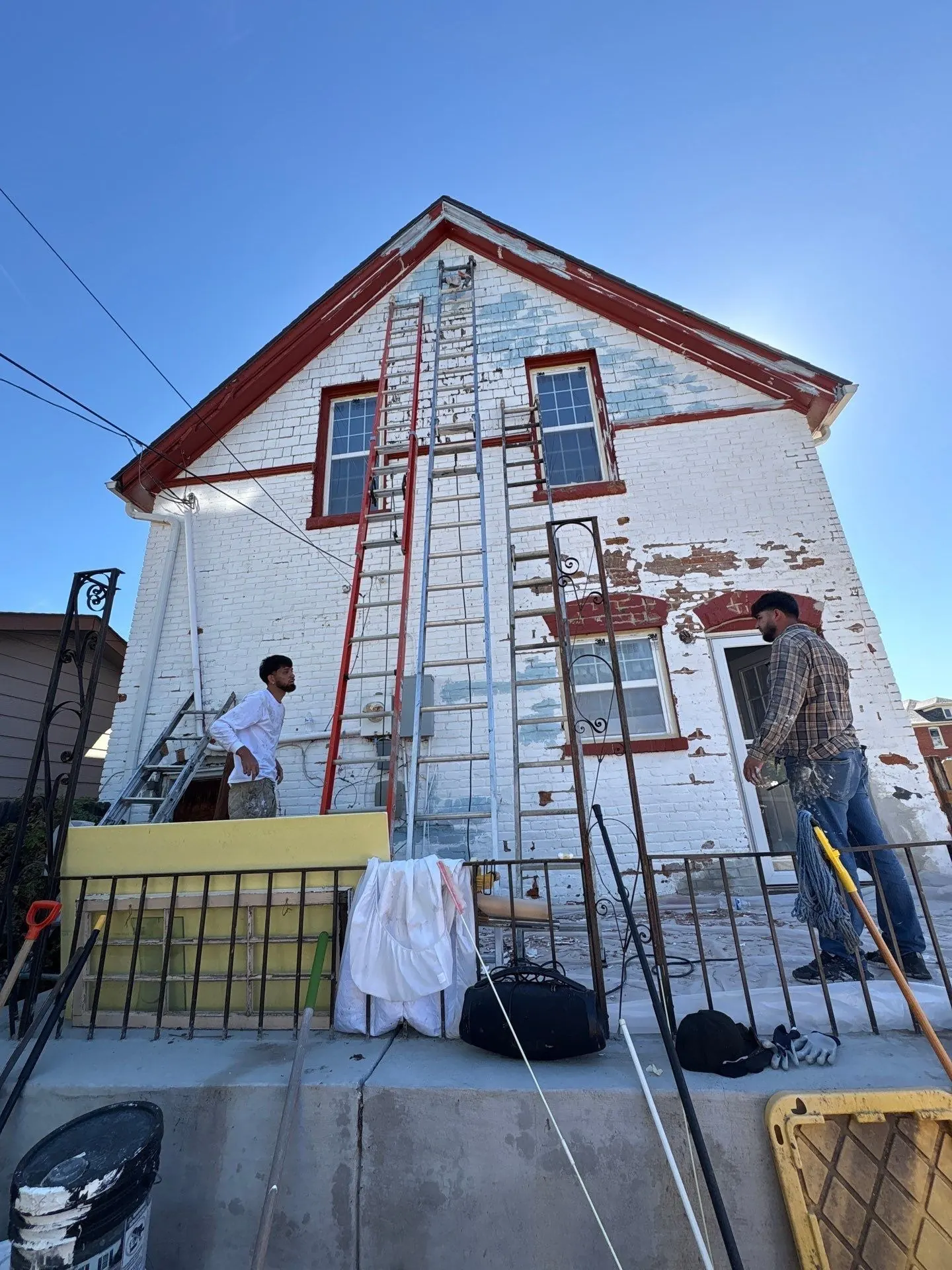
Our crew divided and conquered the prep. That meant:
- Scraping all loose and failing paint from the siding, fascia, and brick
- Caulking open seams and joints so water stays out
- Masking every window and the surfaces not being painted
- Priming all exposed bare wood so the new paint has something solid to grip
Because this was a lead-painted home, everyone on the crew wore P100-rated respirators for the entire prep phase. That is the right level of protection for lead dust, and it is not optional on our job sites.
Prep on a Victorian takes longer than prep on a newer home, and there is no shortcut around it. Fish-scale siding alone has dozens of times more edges than flat lap siding, and every one of them has to be scraped and sealed. This is the step that decides whether a paint job lasts 12 years or fails in three.
The Paint Colors: Shoji White and Carriage Door
Now for the fun part.
The homeowner wanted a color match. Rather than modernize a house this old, they chose to keep the scheme that suits its architecture.
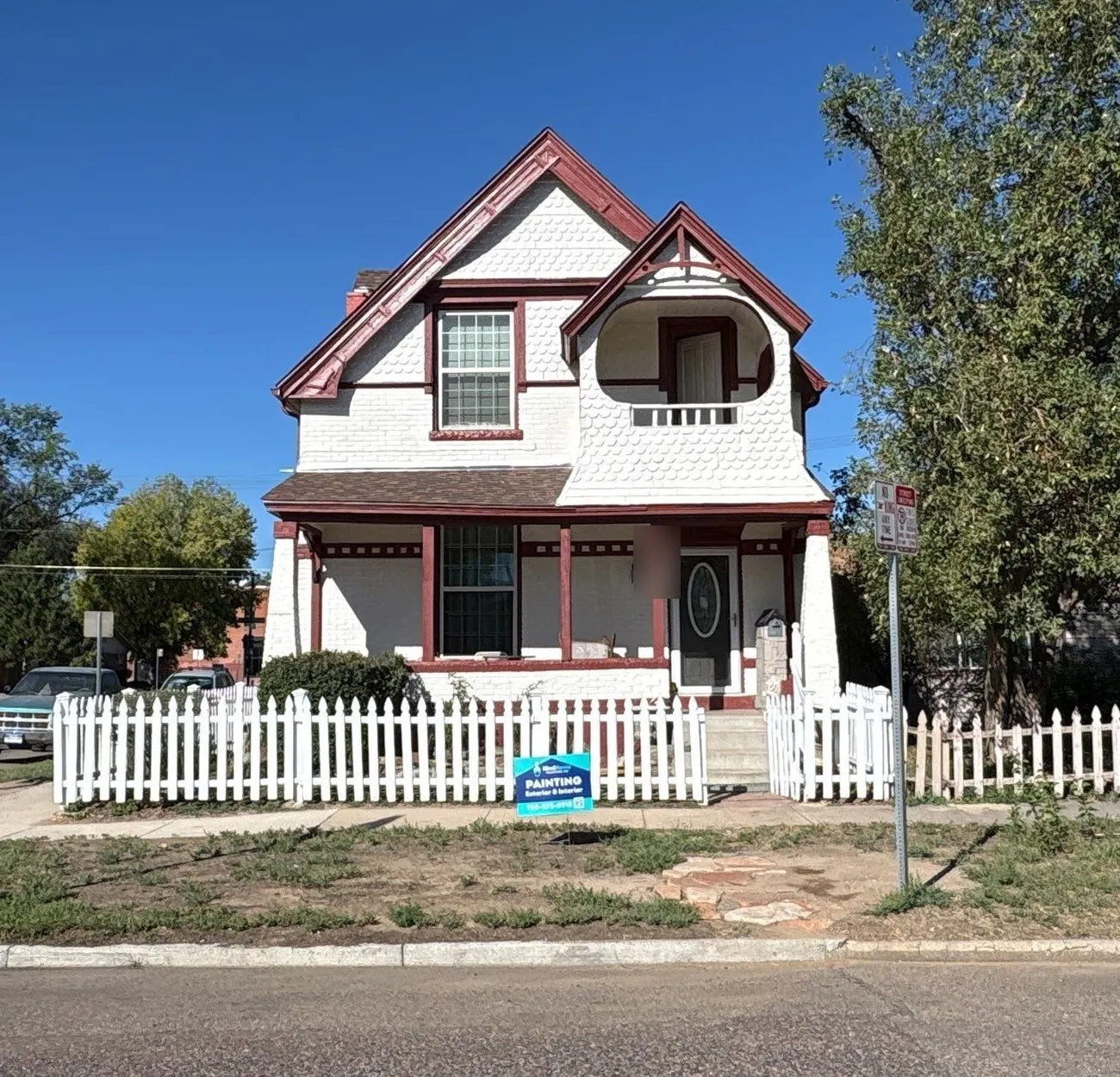
The body and fish-scale siding were painted in Sherwin-Williams Shoji White SW 7042, a soft, muted white with just enough warmth that it never reads stark or clinical in Denver's bright sun.
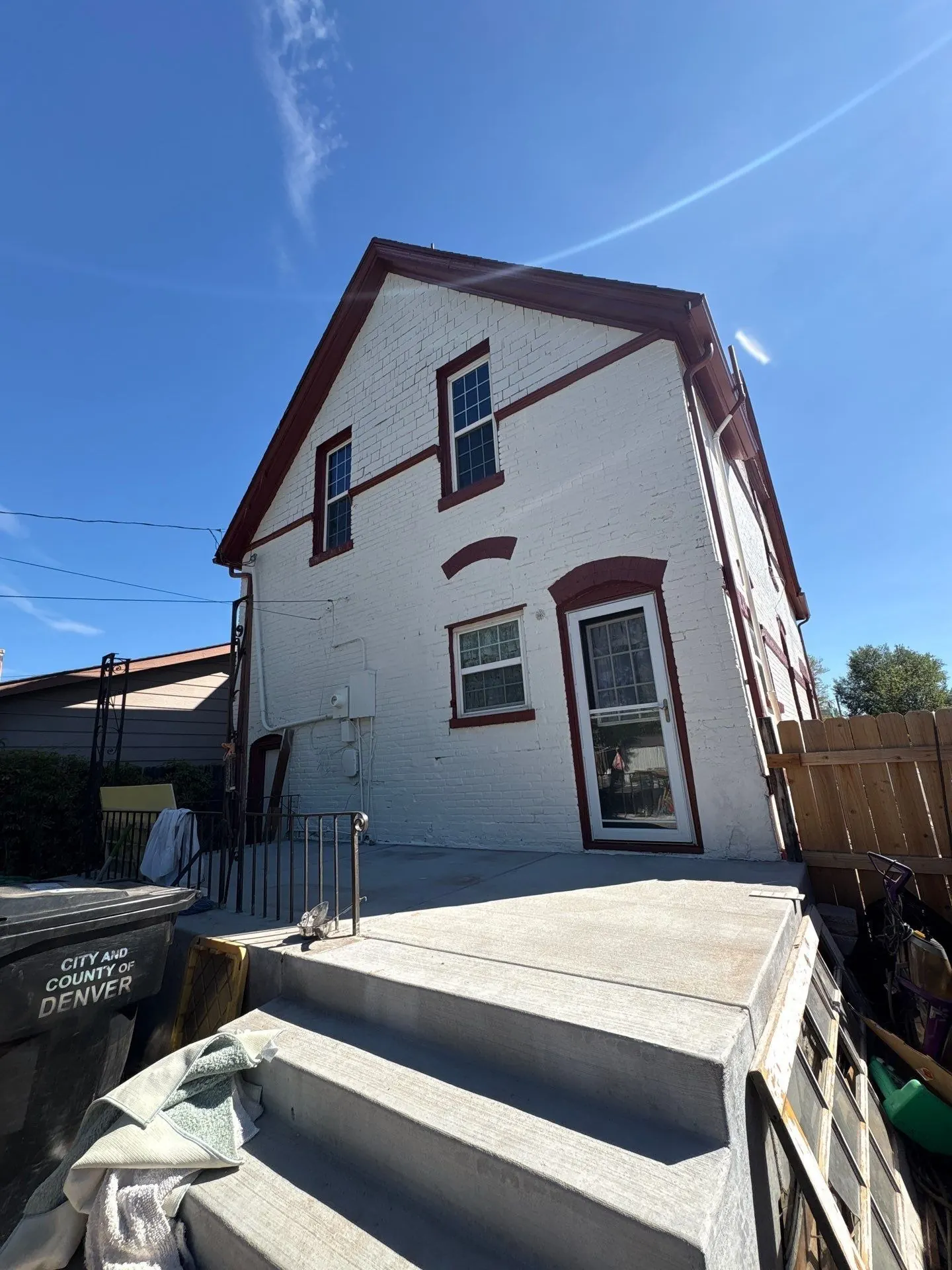
The painted brick accents and fascia were finished in Sherwin-Williams Carriage Door SW 7594, a deep, muted red that nods to the home's original brick and traces the roofline with a clean, rich outline.
Together they are a classic Victorian pairing: a light body that lets the fish-scale texture show, and a dark accent that gives the architecture its definition. If you are deciding between keeping your historic home's colors and trying something new, that is exactly the conversation our certified color consultants have with you, including digital mockups of your actual home so you can see it before we lift a brush.
Why Benjamin Moore Aura for a Historic Home
Here is a detail a lot of homeowners do not know: you are not locked into one brand's paint just because you love one brand's color. Both Sherwin-Williams colors on this project were color-matched and mixed in Benjamin Moore Aura.
Aura is the paint we back with our highest-tier warranty: 12 years, no exclusions. That covers chipping, cracking, fading, peeling, and caulk failures, plus up to $1,000 in hail damage. On a home with this much detail and this much history, the homeowner wanted the strongest protection available, and that is what they got. Read more about what a house painting warranty should cover.
The paint was sprayed for even coverage across the fish-scale siding, getting into every curve and edge of the shingles where a brush or roller would struggle.
The After
The house looks like itself again. The Shoji White body is crisp and clean against the blue Colorado sky, the fish-scale siding finally reads as the craftsmanship it is, and the Carriage Door accents give the brick and roofline back their definition. Nothing about it feels new. It feels restored, the way an 1890 Victorian should.
We were honored to help preserve this piece of Denver history for years to come.
What This Project Cost
This project landed in the $11,000 to $15,000 range. That reflects a full exterior restoration on a historic home once lead-safe containment, hand scraping, caulking, priming bare wood, detailed fish-scale work, two colors, and a premium Benjamin Moore Aura system are all factored in.
Every home is different. Your own number will depend on square footage, the condition of the existing paint, whether lead-safe practices are required, the warranty tier you choose, and how many colors are involved. A free, on-site proposal is the fastest way to get an accurate range for your home.
What to Know Before Painting a Historic Denver Home
If you own a Victorian, a Denver Square, or any home built before 1978, a few things are worth knowing before you hire a painter:
- Ask about lead. Any contractor working on a pre-1978 home should be EPA Lead-Safe Certified, test for lead, and contain the work area. If a painter plans to pressure wash an untested historic home, keep looking.
- Expect more prep time. Decorative trim, fish-scale shingles, and multiple layers of old paint all add labor. That labor is what makes the paint last.
- Bare wood needs primer. Anywhere scraping exposes raw wood, it has to be primed before color goes on, or the topcoat will not bond.
- You can keep your colors and upgrade your paint. Color matching means your historic scheme can go into a premium product with a longer warranty.
- Check for historic district rules. If your home sits in a designated Denver historic district, check with the city's Landmark Preservation office before changing your exterior.
Why It Matters
A few things this project shows about how we work:
- You will not pay until your project is completed, a final inspection is done, and you are 100% satisfied.
- We protect your family, your yard, and our crew. Lead-safe containment and P100 respirators are standard on every pre-1978 home.
- Your paint is protected by our no-exclusions warranty. No fine print, no surprises.
- Your home is treated with Kindness, Love, and Respect, from the initial consultation to the final walkthrough.
If your own historic home is due for a restoration like this one, we would love to talk color, products, and timeline with you. Call us today at (720) 637-4805.
Kind Home Painting, Denver, Colorado's best house painters. See another recent transformation in our north Denver Krypton and Urbane Bronze project, browse our project gallery, or follow along on Instagram @kindhomesolutions for more before-and-after transformations.
Frequently asked questions
How do you safely paint a historic home that has lead paint?
Any home built before 1978 should be treated as if it has lead paint until a test says otherwise. On this 1890 Victorian, we laid tarps and plastic sheeting around the entire house to contain old paint debris, hand-scraped instead of pressure washing so lead particles were not dispersed, and our crew wore P100-rated respirators throughout prep. Kind Home Painting is an EPA Lead-Safe Certified firm, and we test for lead at your estimate.
Can you pressure wash an old Victorian house before painting?
Not if it tests positive for lead, which most Victorian-era homes do. Pressure washing a lead-painted surface sprays paint particles into the yard, the soil, and the air. Instead we contain the work area with tarps and plastic sheeting and hand-clean and hand-scrape the surface before priming and painting.
What paint colors were used on this Denver Victorian?
The body and fish-scale siding were painted in Sherwin-Williams Shoji White, SW 7042, a soft, muted white. The painted brick accents and fascia were painted in Sherwin-Williams Carriage Door, SW 7594, a deep, muted red. The homeowner wanted a color match to the home's existing scheme, so both colors keep the historic character intact.
Can you put Sherwin-Williams colors in Benjamin Moore paint?
Yes. Any color can be color-matched into another brand's paint. On this project, Sherwin-Williams Shoji White and Carriage Door were both mixed in Benjamin Moore Aura, which let the homeowner keep the exact colors they wanted while getting our highest-tier exterior warranty.
What warranty comes with an exterior paint job?
Kind Home Painting offers exterior warranties by paint product, 10 years with Sherwin-Williams Emerald, 11 years with Sherwin-Williams Emerald Rain Refresh, and 12 years with Benjamin Moore Aura. Every exterior warranty is a no-exclusions warranty covering chipping, cracking, fading, peeling, and caulk failures, plus up to $1,000 in hail damage. This project used the 12-year Aura system.
How much does it cost to paint a historic home in Denver?
This 1890 Victorian in Denver's City Park neighborhood came in between $11,000 and $15,000, which included lead-safe containment, hand scraping, caulking, priming bare wood, a two-color scheme, and Benjamin Moore Aura with a 12-year warranty. Historic homes usually cost more to paint than newer homes of the same size, because lead-safe work and detailed trim like fish-scale siding add labor. A free, on-site estimate is the most accurate way to get a number for your specific home.
Do I have to pay before the project is finished?
No. You will not pay until your project is completed, a final inspection is done, and you are 100% satisfied with the work.